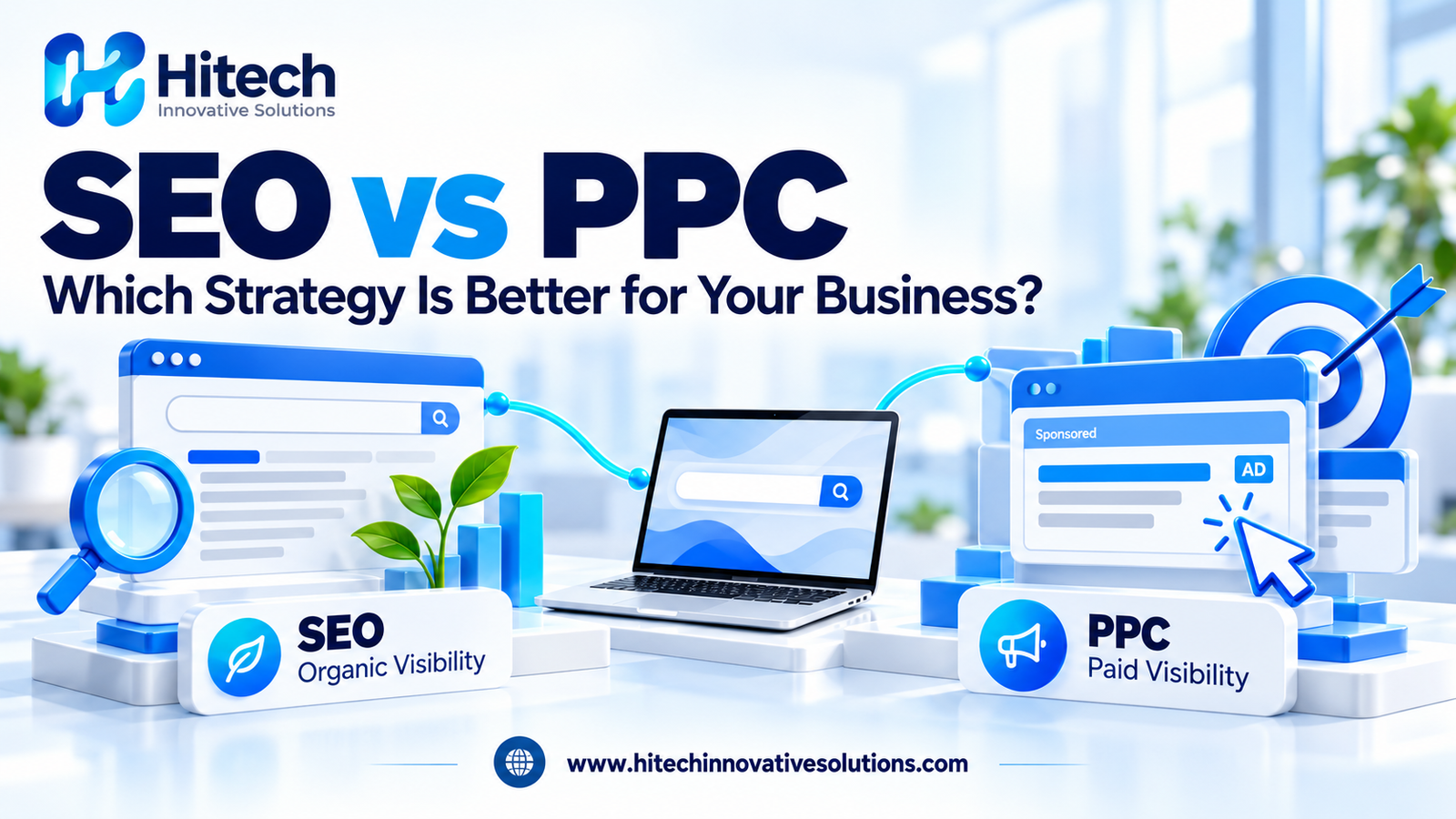
Your customers are searching online for products, services, and answers. The challenge is getting your business in front of them at the right moment. Search engine optimisation and pay-per-click advertising offer two ways to make that happen, but they work differently.
SEO focuses on improving your visibility in organic search results. PPC uses paid advertising to reach potential customers through targeted campaigns. Both can generate enquiries and sales when supported by the right website, messaging, and measurement.
At Hitech Innovative Solutions, we approach this decision around your business goals. The right investment depends on your timeline, competition, budget, and ability to turn visitors into customers.
Search engine optimisation improves how search engines understand your website and how easily potential customers discover it. It involves useful content, clear page structure, technical improvements, and a website experience that helps visitors find what they need.
Google describes SEO as helping search engines understand content while helping users discover a website and decide whether to visit it. Following good practices can improve visibility, although rankings and indexing are never guaranteed. developers.google.com
For businesses, effective SEO connects customer questions with relevant pages. A software company might publish service pages, explain development processes, and answer common buying questions to attract suitable enquiries.
Pay-per-click advertising is a model in which advertisers pay when someone clicks their ad. Paid search campaigns can place your message in front of people searching for relevant products or services.
A campaign combines targeting, advertising copy, bidding, and a destination page. These elements should support one clear action, such as requesting a consultation, purchasing a product, or booking an appointment.
Cost per click measures the amount charged for a click. Average CPC is calculated by dividing total click costs by the number of clicks received. However, clicks alone do not show whether a campaign is profitable.
PPC can provide visibility sooner once campaigns are approved and eligible to serve. This makes it useful when a business needs to promote a launch, test an offer, or support a seasonal campaign.
SEO generally requires a longer development period. Search engines need to discover changes, and businesses must establish relevant content and a technically sound website.
Neither channel guarantees immediate sales. Advertising may bring visitors quickly, but campaign optimisation and customer conversion still require work. SEO progress also varies according to competition, website condition, content quality, and the searches being targeted.
SEO does not charge your business for each organic click, but it requires investment. Research, writing, development, technical maintenance, and reporting all involve resources.
PPC requires an advertising budget alongside campaign management, creative development, tracking, and landing-page improvements. When advertising stops, the campaign’s paid traffic generally stops with it.
The better comparison is total acquisition cost. A channel that produces inexpensive traffic may still be costly if few visitors become customers. Businesses should assess what they spend to generate a qualified enquiry or completed sale, including the work required to support each channel.
Customer intent describes what someone wants to achieve through a search. Some people are gathering information, while others are comparing suppliers or preparing to buy.
SEO can support different stages through educational articles, comparison content, and focused service pages. PPC can also reach different stages, although commercial searches often provide a useful starting point for lead-generation campaigns.
A person searching for “what is custom software” needs different information from someone searching for a development company. Matching the page and message to that need helps make both organic and paid traffic more valuable.
SEO is a strong consideration when your business wants to develop an ongoing search presence. It suits companies that can consistently improve their websites and publish content grounded in customer needs.
Service businesses can use SEO to explain their expertise, answer buying questions, and help customers understand their options. E-commerce businesses can improve product discovery through organised categories and informative product pages.
The opportunity grows when existing pages already attract relevant visitors but fail to address important questions. Improving those pages may provide a practical foundation before expanding into additional topics.
PPC can help when speed, focused targeting, and controlled testing are priorities. A new business may use campaigns to reach potential customers while its organic presence develops.
It can also support specific services, geographic areas, or promotional periods. For example, a business could advertise one high-value service through a dedicated landing page rather than sending every visitor to its homepage.
Successful testing requires a defined budget and a clear outcome. Before launching, establish what counts as a qualified lead, how enquiries will be handled, and what customer acquisition cost the business can reasonably support.
SEO and PPC bring people to your website. The website must then help them take the next step.
Slow pages, unclear service descriptions, difficult navigation, and complicated forms can weaken performance. Visitors need to understand your offer, recognise its relevance, and find a straightforward way to contact you.
At Hitech Innovative Solutions, we connect website development with marketing requirements. A landing page should reflect the message that brought someone there, explain the service clearly, and make the intended action easy to complete. These improvements support the value of traffic from either channel.
SEO and PPC can contribute to a shared marketing strategy. Paid campaigns can test messaging and identify searches that generate useful enquiries. Those findings can inform content planning and service-page improvements.
Organic search data can reveal questions and themes worth exploring through advertising. Together, the channels provide different perspectives on customer demand.
However, paid advertising does not purchase higher organic rankings. Its value comes from the traffic and insights it generates. Teams should share relevant findings while measuring the channels separately enough to understand their individual contribution and combined effect.
A useful report connects marketing activity with business outcomes. Rankings, impressions, and clicks provide context, but they should lead to questions about enquiry quality, sales, and revenue.
For lead-generation businesses, tracking should distinguish a submitted form from a genuine sales opportunity. For online stores, measurement should consider completed purchases and profitability.
Reviewing customer acquisition cost alongside order value, margins, and repeat business helps guide investment. Attribution also requires judgment because customers may interact with several channels before converting. Decisions should reflect the buying journey rather than relying entirely on one dashboard figure.
At Hitech Innovative Solutions, we begin by understanding your services, target customers, website condition, and growth objectives. This creates a practical basis for choosing where to invest.
A business needing immediate enquiries may benefit from a focused PPC campaign supported by landing-page improvements. Another may gain more from resolving technical problems and strengthening its organic content.
Our development and digital marketing services help connect these activities. The aim is to build a workable plan, measure its contribution, and adjust investment as evidence develops.
It depends on the business. SEO can support ongoing visibility, while PPC can provide faster access to targeted audiences. Small businesses should consider local competition, available resources, urgency, and the value of a new customer before choosing.
Paying for ads does not directly improve organic rankings. PPC can still provide useful information about search demand, messaging, and conversion behaviour. Those insights may guide separate improvements to website content and the customer experience.
SEO requires ongoing attention. Customer needs, competitors, search results, and website content can change. Maintaining useful pages, checking technical performance, and reviewing results help a business protect and improve the value of its organic presence.
Yes, but a focused approach matters. Start with a specific service, audience, or location. Improve essential website pages, establish conversion tracking, and allocate resources to activities you can maintain and evaluate before expanding.
SEO and PPC serve different needs, and many businesses can benefit from both. The decision should reflect how quickly you need results, what you can invest, and how effectively your website converts interest into action.
Hitech Innovative Solutions helps businesses bring development, SEO, and paid campaigns together around clear goals. Discuss your requirements with our team at info@hitechinnovativesolutions.com or visit www.hitechinnovativesolutions.com.